Click HERE to access the WAIR Forum 2026 registration page

WAIER
The premier institute for educational research in Western Australia

Click HERE to access the WAIR Forum 2026 registration page
HDR Pre-Forum Workshop 2026
Friday 14th August 2026
5-7 pm
WAIER is proud to present our sixth HDR pre-Forum workshop. Designed to connect our educational research candidates across all Western Australian tertiary institutions this two-hour workshop will provide interactive learning and peer to peer connections to build your professional connections.
Who Should Attend: HDR candidates at all stages of candidature.
From Thesis to Contribution: Articulating Your Research Story
Facilitated by Dr Sian Chapman
How do you move from describing your thesis (part 1) to clearly articulating what it contributes to educational research and practice (part 2)?
This interactive workshop supports postgraduate research candidates to reframe their research story, clarify their contribution, and practice communicating their work to different audiences. Designed for HDR students across all stages of projects, the session offers practical tools, reflective discussion, and structured writing time to help participants confidently articulate why their research matters, and to whom.
Cost:
HDR Forum – Free with Forum attendance
HDR student Forum and WAIER Forum – $100 Members. $130 Non-members
Early bird Registration by Friday July 31st
Please see Forum page for payment link
Facilitator Dr Sian Chapman
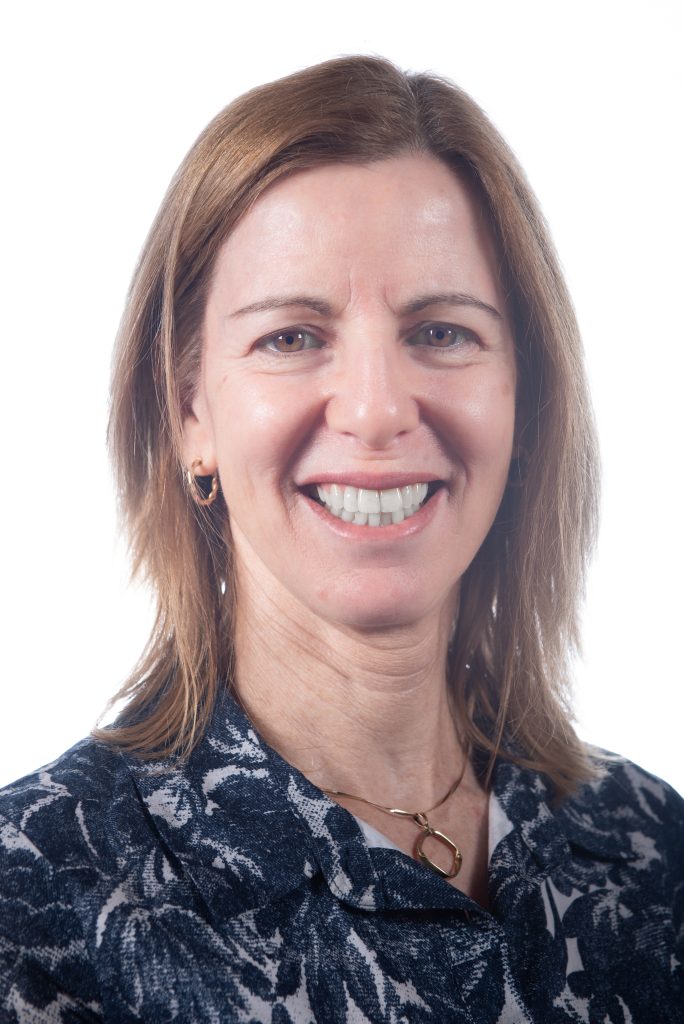
Sian is a Senior Lecturer at Murdoch University in Perth, Western Australia, teaching into undergraduate and post-graduate ITE programs. Her research interests include education policy and practice, teacher agency and change, and understanding systemic difference through complexity theory. These concepts are explored across a range of topics including arts education, inclusive education, teacher wellbeing and practice. Sian is also the current President of the Western Australian Institute for Educational Research (WAIER).
According to standardized test data the quality of writing in schools has been declining for more than a decade (Gardner 2018). A compounding factor may be the finding that many student teachers lack confidence in themselves as writers (Gardner 2014; Gardner & Kuzich, 2022). Following research of teachers as writers (Cremin & Oliver 2017, Gardner and Kuzich (2023) investigated the efficacy of using an immersive approach to writing in which first year B.Ed. students were positioned as writers during the first semester of their course. In addition to increased self-confidence as writers, students reported an enhanced knowledge of the writing process and the impact on emotional and psychological well-being. In addition to developing a pedagogy of writing, it is suggested that positioning students as writers has a positive impact on self-esteem and self-efficacy, potentially leading to improvements in the teaching of writing. However, additional longitudinal research is required in order ascertain whether short-term immersion in writing translates into improved standards of writing in schools.
References:
Cremin, T. & Oliver, L. (2017). Teachers as writers: A systematic review. Research Papers in Education. 32(3) 269 – 295.
Gardner, P. (2014). Becoming a teacher of writing: Primary student teachers reviewing their relationship with writing, English in Education, 48(2) 128 – 148.
Gardner, P. (2018). NAPLAN: The Writing is on the Wall but Who is Actually Reading It? English in Australia, 53(1) 15 – 23.
Gardner, P. & Kuzich, S. (2022) Ready to Write? An investigation of the writing experiences of pre-service teachers. Issues in Educational Research. https://search.informit.org/doi/abs/10.3316/informit.579218876968723?casa_token=UcAJvROfvOEAAAAA%3AiU-Ls4MM09YuXg3aaOZ2NquBbIN8bmNgVmfrkqCnS5KkVi5xf7gKLnr2q635W94gDBtd3Dq95GDDX94
Gardner, P. & Kuzich, S. (2023) Student teachers as Writers: using an ‘immersive’ approach in ITE to build positive writers. DOI: 10.1111/lit.12337

Gregory Hine (University of Notre Dame Australia) and Sandra Herbert (Deakin University)
A well-established claim is that teacher education programs are pivotal in the professional preparation and formation of pre-service secondary mathematics teachers (PSMTs). Despite this claim, there appears to be a lack of understanding of how best to prepare PSMTs for the profession.
The purpose of this study was to examine and monitor changes over time in PSMTs’ views about approaches to teaching mathematics in secondary schools, before and after undertaking mathematics teaching methods courses (including practicum teaching). These views included their perceived readiness to teach secondary mathematics, as well as an indication of their likelihood to use particular teaching approaches for mathematics.
For this study, PSMTs at two Australian universities were surveyed before and after they undertook their respective teaching methods courses, and interviewed upon course completion. Overall, survey data did not indicate a significant change in PSMTs’ views of readiness to teach mathematics from either university (N = 61 pre-survey, N = 34 post-survey).
An analysis of interview data revealed that PSMTs did not feel ready to teach secondary mathematics, with their emphases focused on two areas where improvement was needed. The areas requiring improvement were their mathematical content knowledge and mathematical pedagogical knowledge. Nevertheless, nearly half of the interviewees reported feeling confident to teach mathematics to lower secondary classes (Years 7-10). Despite these concessions, all interviewed PSMTs outlined at least one area where they had experienced professional growth since commencing a teacher education degree.
Issues in Educational Research, 32(2), 533-554. http://www.iier.org.au/iier32/hine.pdf
Paul Gardner & Sonja Kuzich – Curtin University, School of Education
Over several decades, a preoccupation with reading has dominated the literacy debate in primary education. One-sided discussions around literacy not only neglect to consider the symbiotic relationship of reading and writing, but marginalise writing as a worthwhile subject for research. Increasingly, primary teachers are using commercial writing programs as a means of scaffolding the writing curriculum. However, using NAPLAN results as a benchmark, standards of writing have consistently deteriorated over the last decade. Starting from the premise that teachers need to be confident writers in order to teach writing, this study surveyed the writing practices of First Year Primary and Early Childhood Education (ECE) B.Ed. students on entry to university.
Findings show that although student teachers write regularly, they most frequently write short, informal digital texts, rather than the text types common to the primary English curriculum. Over fifty percent of students had not written a story or poem in over two years, and in some instances, it was more than a decade. It is suggested that insufficient recent experience of writing the text-types they will teach on graduation may be a factor contributing to falling standards of writing. International studies show this phenomenon is not restricted to Australia.
The study recommends that writing should be given a higher profile in Initial Teacher Education (ITE) through a ‘knowledge in praxis’ approach in which student-teachers are positioned as writers who learn about writer agency and compositional processes as ‘insiders’.
The study is followed by a second paper, yet to be published, in which students reflect on their experiences of learning about writing after being immersed in this ‘knowledge in praxis’ approach.
An investigation of the writing experiences of pre-service teachers, Issues in Educational Research, 32(2), 513-532 http://www.iier.org.au/iier32/gardner.pdf

